

By: Maksum Syam
The journey to Seko is not one that can be described in a single sentence.
From Masamba, the capital of North Luwu Regency, I rode on the back of a motorcycle taxi whose fare can reach two million rupiah one way, depending on the weather conditions that determine how difficult the terrain will be. Along that journey, I began to understand two things at once: why this community had been able to live for thousands of years almost isolated from the outside world, and why that isolation has now become a vulnerability.
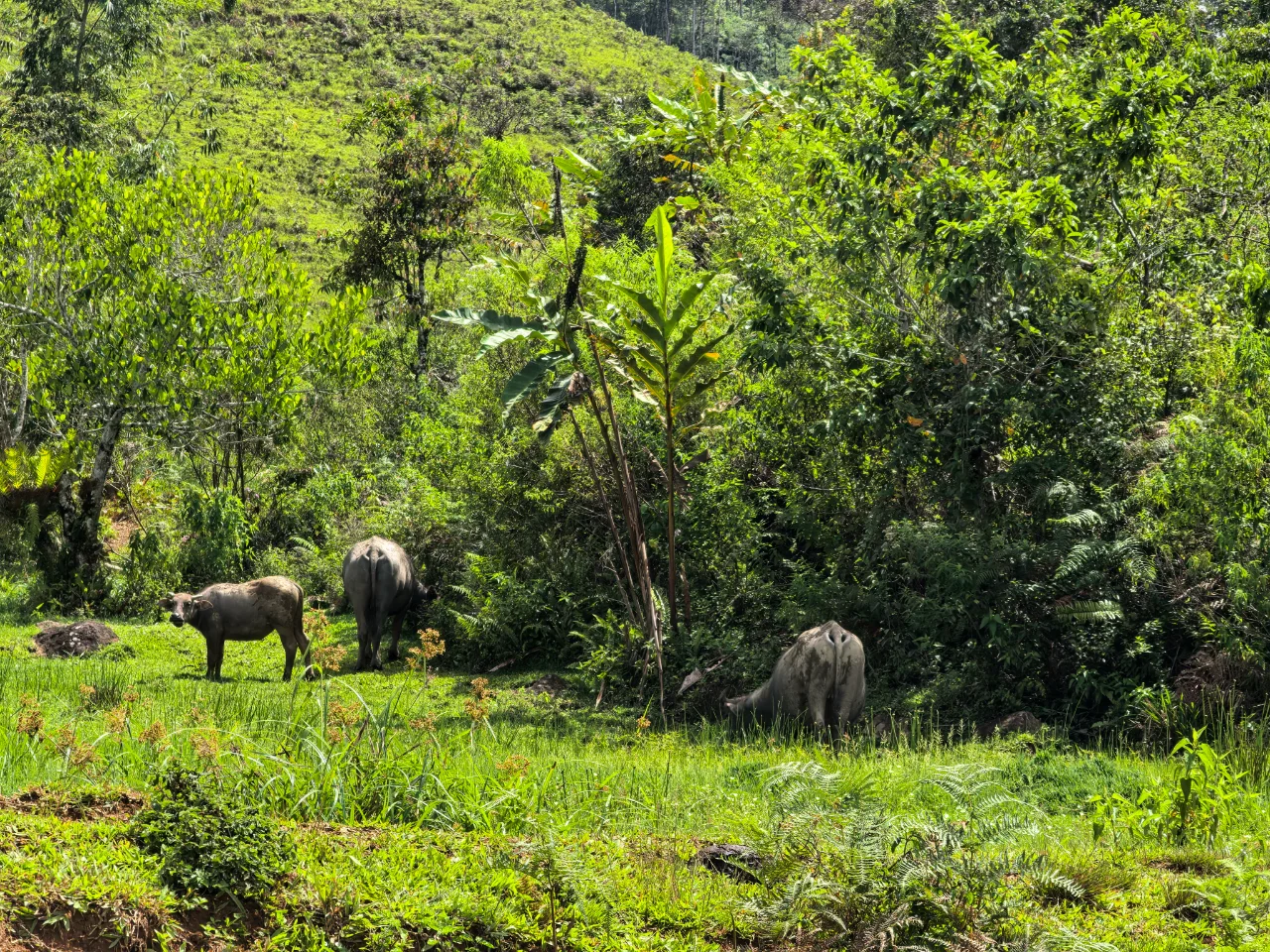
When I finally arrived at the vast green savanna protected by the Kambuno Mountains, I stood still for quite a while. Hundreds of cows, buffaloes, and horses roamed freely across the grasslands. They were not wild animals. This is how people raise livestock in Seko: animals belonging to villagers are allowed to live freely in nature. One resident accompanying me explained that the average family owns between ten and sixty head of livestock. Each herder has developed their own way of communicating with their animals to prevent accidental mix-ups.
It was on that expanse of grassland that I first understood what was truly at stake.
***
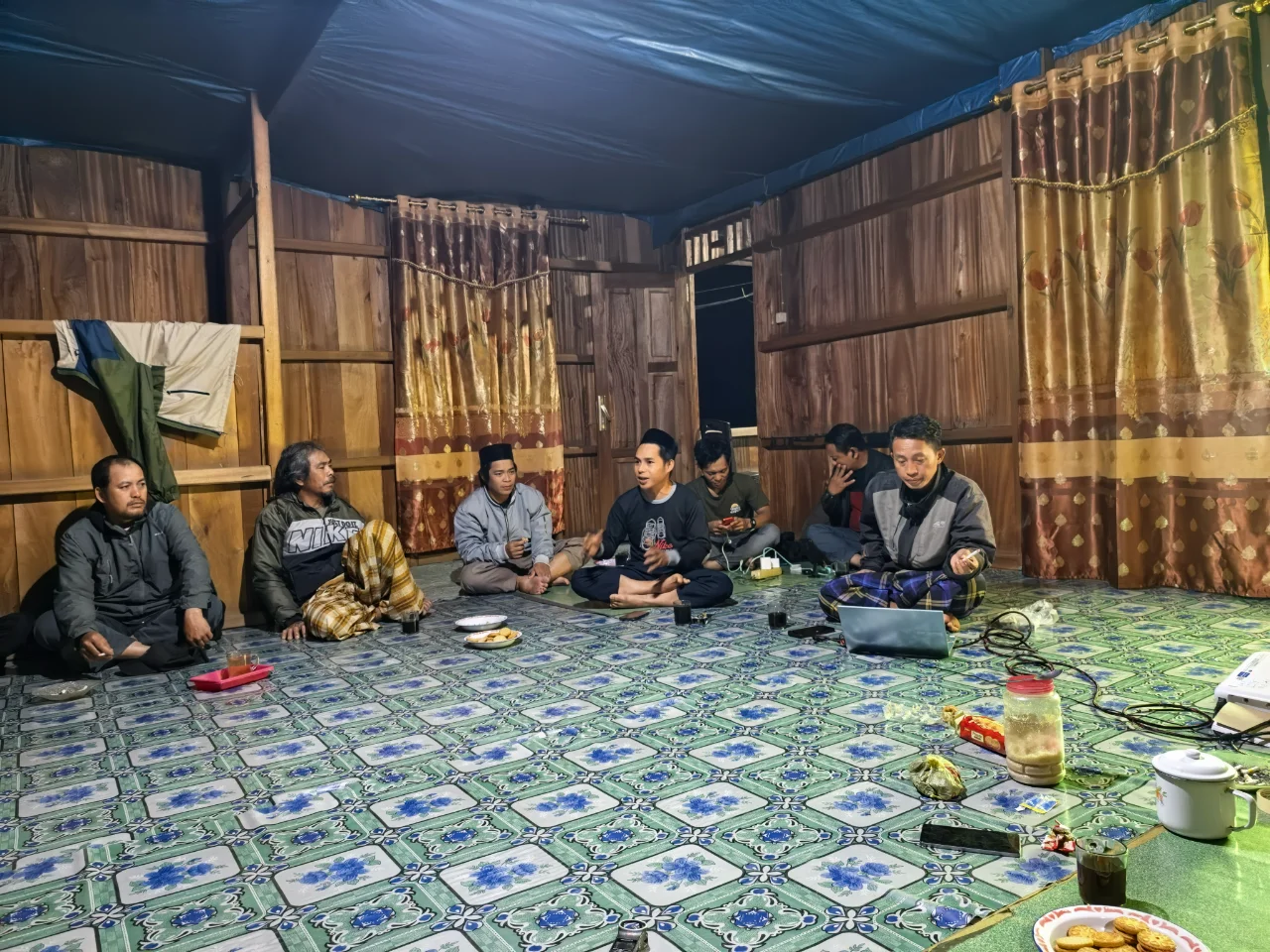
The meeting at the Seko District Office had been going on for several hours when the elderly man finally spoke.
We sat in a circle: teams from HuMa, Wallacea, and AMAN Seko alongside Indigenous community representatives, untangling the threads of a tenure conflict that had persisted for more than four decades. A draft legal opinion lay spread across the table. Legal arguments were debated. The old man listened to it all in prolonged silence.
Then he opened his mouth.
“We escaped the crocodile’s jaws only to enter the tiger’s maw.”
That single sentence summarized what hundreds of pages of agrarian law documents spread before us had failed to capture. For decades, they had been confronting the Cultivation Rights Title (HGU) of PT Seko Fajar Plantation, which claimed 23,718 hectares of their ancestral land. Now, just as that HGU had finally expired, the state had prepared a new predator: the Land Bank Agency, complete with land restructuring decrees, new boundary markers, and plans for thousands of corporate-owned cattle on communal grazing lands that had existed long before this republic was born.
***
Turong, Hono, Ambalong, Pohoneang, Kariango, Bungku Owi, Lodang, Hoyane, and Beropa. Nine names unfamiliar to most Indonesians, yet far older than the republic itself. Community members believe their ancestors came from Kalumpang. Their historical roots have stretched into Seko for thousands of years. Here they built strong social bonds, a resilient civilization, and a harmonious way of life—not only in human relationships, but also in how they governed the natural wealth provided by the land.
The existence of these Indigenous customary law communities is not a romantic claim. The state has recognized them through North Luwu Regent Decree No. 300/2004, reinforced by Regional Regulation No. 2/2020. In 2025, the Regent issued three additional decrees establishing territorial boundaries and recognizing customary leadership for the Turong, Hono, and Singkalang communities.
Unfortunately, amid those glimmers of hope, this is where the agrarian crisis began. Roads and electricity, which made it easier for residents to transport goods to market, also opened a clear path for capital interests to enter the village and target customary lands.
***
From conversations with elders and from documents I reviewed with the team, the conflict began in 1985. PT Seko Fajar Plantation arrived with a unilateral claim over customary territory for the development of large-scale tea plantations. Together with the National Land Agency (BPN), between 1991 and 1995 they conducted unilateral land surveys: approximately one thousand boundary markers were installed across the lands of five Indigenous communities without consent. On August 16, 1996, the state issued an HGU certificate covering 23,718 hectares.
The promised prosperity never came. PT SFP did almost nothing, except establish a roughly ten-hectare coffee nursery that was eventually abandoned. For decades, it was the Indigenous communities who cultivated and maintained the land. From the moment PT SFP first laid claim to the area until the day I sat in that district office, Indigenous communities had never ceased occupying, using, and benefiting from their customary territories.
In 2012, BPN declared the land abandoned. The company fought back through the Administrative Court and all the way to the Supreme Court, ultimately winning with a chilling argument: it had failed to establish tea plantations because the government had not provided adequate road infrastructure.
On August 16, 2020, PT SFP’s HGU officially expired. For Indigenous residents, it seemed like a ray of hope.
Instead, the state arrived bearing bad news. Using regulations derived from the Job Creation Law, the Ministry of Agrarian Affairs and Spatial Planning/National Land Agency (ATR/BPN) issued a land restructuring decree in December 2023 covering 22,385.26 hectares of former HGU land.
The area was divided into four portions:
- A new HGU of 13,384.11 hectares for the company;
- A Management Rights Title (HPL) of 5,000 hectares for the Land Bank Agency;
- A Right of Use allocation of 4,000 hectares for the North Luwu Regency Government;
- And an Agrarian Reform enclave of 2,311.50 hectares [author’s note: please verify this figure] for the communities who had cared for all of it for thousands of years.
The company that had neglected the land for decades was rewarded once again with state trust. The people who had maintained it were once again treated as offenders.
***
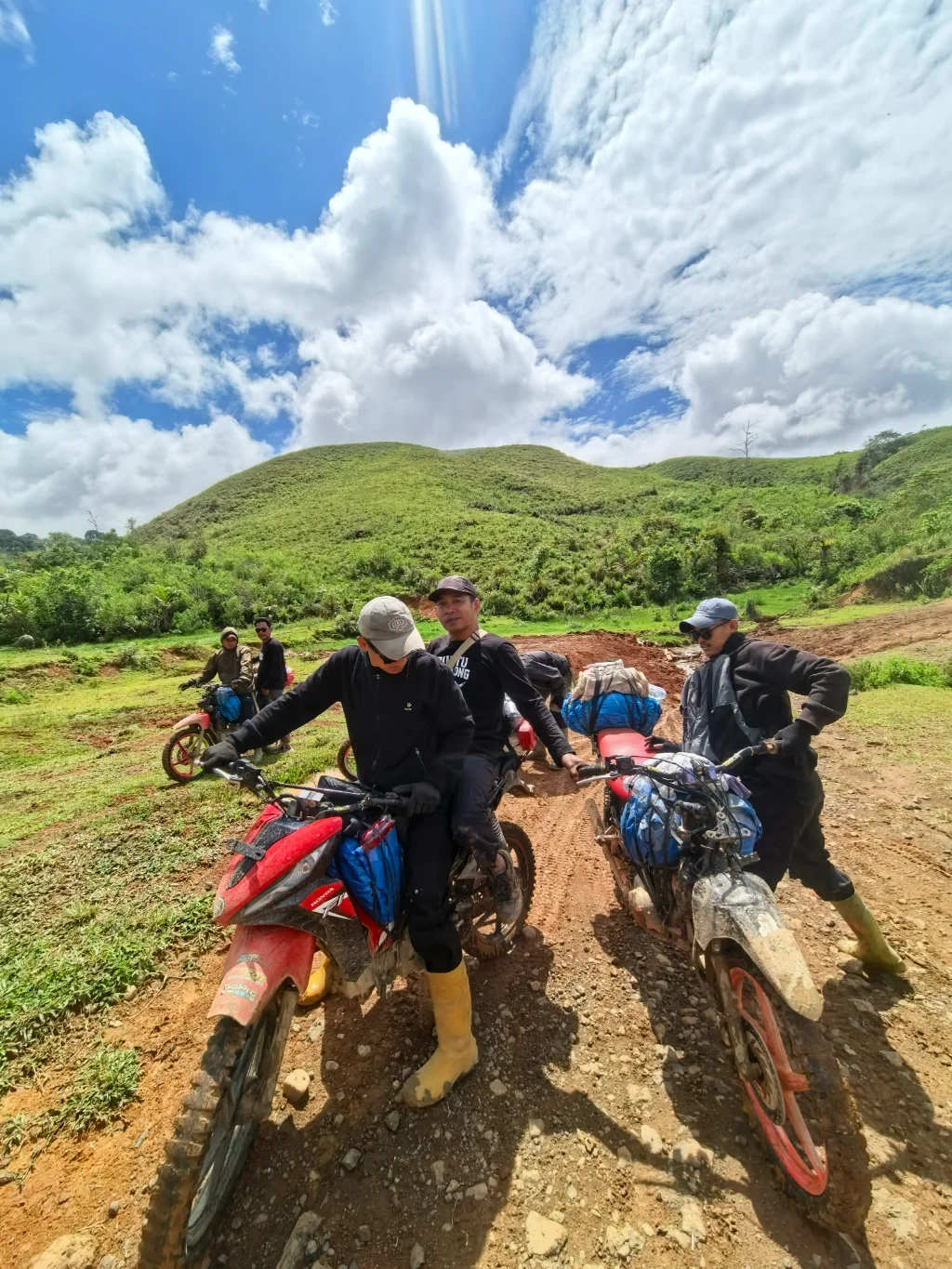
When I visited Marante Village, traces of resistance could still be felt in the way people spoke.
In early 2024, individuals identifying themselves as Land Bank Agency officials entered Hono customary territory without permission.
They planted hundreds of boundary markers among cacao plantations awaiting harvest, across rice fields turning green, and even on communal grazing lands.
The Hono Indigenous community responded with dignity. On March 22, 2024, several Indigenous youth and university students, together with Reverend Robin, held a dialogue with Land Bank Agency representatives and the Limbong Police Chief in Palopo City.
The meeting produced a verbal agreement: villagers could remove the markers as long as they did not damage them.
Based on that agreement, Marante residents carefully removed hundreds of markers. The markers were stored in villagers’ homes and at the village office. On April 22, 2024, three affected Indigenous communities—Hono, Turong, and Singkalong—held a customary assembly known as Mukobu, which provided spiritual and cultural legitimacy for the action.
It turned out that for the state, a verbal agreement was not enough.
There is an old saying: if buffaloes are controlled by ropes, people are bound by their word. But the state is an institution, not a person. And the state broke its word.
On May 29, 2024, the South Sulawesi Regional Police summoned nine residents for questioning on allegations of theft and destruction of boundary markers. On September 9, 2024, heavily armed police entered the village to forcibly bring in those who had received summonses and to confiscate the markers.
When I spoke with a young man who had stood in the front line of defense that day, he recounted the events calmly. Hundreds of villagers took to the roads. Stones and tree trunks blocked access routes. The armed officers turned around and returned to their station. “We weren’t afraid because we knew we were right,” he said quietly.
That energy was still palpable when I was there.
In February 2026, between the 4th and the 6th, representatives of the Land Bank Agency returned, this time with an inventorying agenda and a more civilian appearance. They came to the district office. Thousands of people from villages across the region surrounded the building. They had one demand: The Land Bank Agency must leave immediately and cancel all plans for their homeland. The officials left. But the wound only deepened.
***
While I was still in Seko, residents spoke about the next threat already looming on the horizon.
Since 2014, rumors had circulated that industrial-scale cattle ranching would be introduced. In 2018, the Seko area was unilaterally designated as a Livestock Business Zone (KUNAK). I looked out over the grazing fields before me and could not understand the logic. Here, the average family already owns dozens of free-roaming livestock. It is a self-sufficient community-based livestock system. Why build industrial ranches on top of it? Article 32 of Law No. 41 of 2014 explicitly encourages the government to empower small-scale local livestock farmers, not replace them.
To force the industrial cattle project into the region, customary land transfers were quietly carried out in 2020 without the knowledge of customary governance structures. Three villages unilaterally donated 100 hectares each.
On December 19, 2025, the North Luwu Regency Government officially signed a memorandum of understanding with PT Seko Harapan Indonesia under the Tiran Group.
And that is not all. Seko is included within the national priority transmigration map for 2025–2029. Wallacea and AMAN Seko conducted a spatial mapping analysis and discovered highly alarming overlaps.
Bringing hundreds of new households into an already unstable region is not a wise decision. A social order built over thousands of years can be shattered in a short time. Food sovereignty and the local food knowledge systems developed over millennia could disappear as well.
I shared those concerns with a young customary leader as we sat beside the grazing fields on the evening before I left Seko. He gazed across the grasslands for a moment before replying: “We were here before this country existed. We will still be here after all of this is over.”
***
On the flight back to Makassar, I wrote down two ways of understanding land that I had witnessed firsthand in Seko.
On one side stands the logic of the state: rigid, document-based. Once an HGU expires, the land is considered state land, free to be redistributed through the Land Bank. Positive law applies without regard for who actually lives on and depends upon that land.
On the other side stand the Indigenous communities: customary land rights are inherent rights. They are inherited across generations and do not originate from state recognition. A piece of paper bearing the state emblem cannot extinguish them.
I remembered that the nation’s founders were more visionary than many of their successors.
Article 18B(2) of the 1945 Constitution affirms the state’s obligation to recognize and respect Indigenous customary law communities and their traditional rights.
The Basic Agrarian Law (Law No. 5 of 1960) establishes customary law as the foundation of Indonesia’s agrarian legal system.
Supreme Court Jurisprudence No. 5287 K/Pdt/2025 affirms that Indigenous peoples’ rights over ancestral lands do not depend on a formal recognition document, but on the fact of continuous, hereditary occupation.
And perhaps most importantly, Regulation of the Minister of ATR/BPN No. 18 of 2021 requires that any allocation of Land Bank management rights over land already occupied by others must first be resolved through deliberation and agreement.
No such deliberation ever took place in Seko.
No consent was sought.
The conclusion is clear: The Ministry of ATR/BPN is obligated to revoke the Land Bank Agency’s Management Rights Title (HPL) over Seko’s customary lands. I closed my notebook and looked out the airplane window. Somewhere below, that savanna still stretched across the landscape. The cows, buffaloes, and horses still roamed freely.
For now.
The old man in the district office was not wrong. The tiger’s maw is already open. And this time, the people of Seko know exactly where they stand.


0 Comments
Leave a Reply